
AI recovery companion · available 24/7
Support in the Moment. Recovery for a Lifetime.
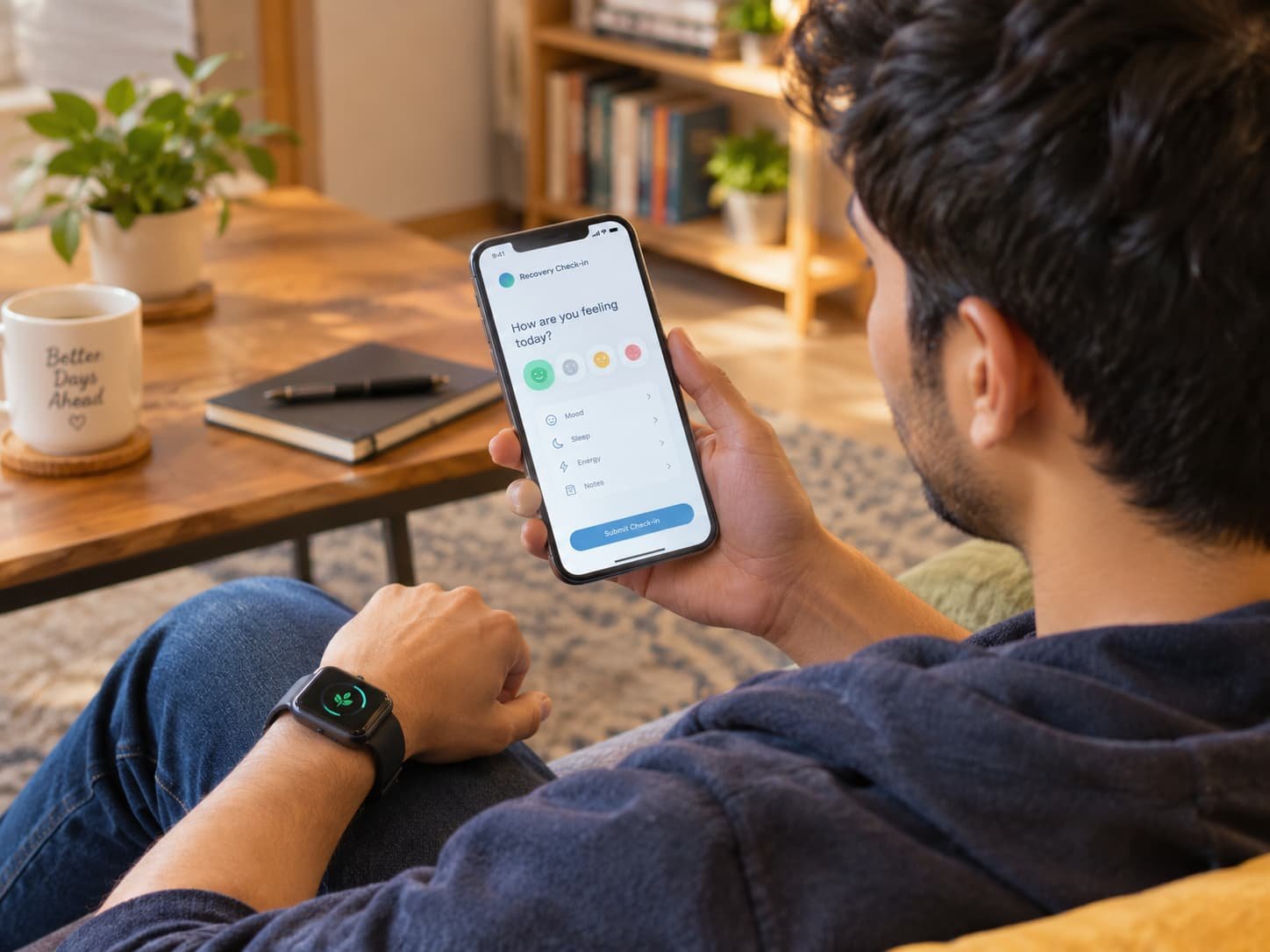
RecoverMeNow is an AI recovery companion that notices when stress is building, checks in with you, and connects you to your sponsor, family or counselor in the moments that matter most.
- 56 documents in the library
- 3 free downloads
- 25 Celebrate Recovery lessons
- 17 issue pamphlets
THE NEXT SOCIAL CHALLENGE
America is approaching a behavioral-health inflection point.
The problem is no longer simply whether treatment exists.
The question is whether treatment can meet people where, when, and how they are willing to engage.
7.9Million
Each year, the nation’s local jails record approximately 7.9 million admissions
52.6Million
In 2024, approximately 52.6 million Americans age 12 or older were classified as needing substance-use treatment.
42.4Million
Of those with a substance-use disorder, approximately 42.4 million did not receive substance-use treatment.
Selected data sources: U.S. Department of Justice, Bureau of Justice Statistics, Jail Inmates in 2024 – Statistical Tables. SAMHSA, 2024 National Survey on Drug Use and Health (NSDUH), Annual National Report.
What RecoverMeNow is
Bridging the Gap Between Treatment Sessions
RecoverMeNow is not designed to replace clinicians, physicians, sponsors, treatment programs, or human relationships. Instead, it is a 24/7 intelligent recovery companion that strengthens these connections, reinforces learned skills, recognizes potential triggers, and encourages the next healthy step whenever additional support is needed.
- A companion that can check in.
- A companion that remembers recovery goals.
- A companion that can recognize patterns and potential triggers.
- A companion that can encourage the user to contact a sponsor, counselor, peer, family member, clinician or emergency resource when human intervention is needed.
Features
Resources to use with groups today
Read them online or download the original files. They sit alongside the recovery literature RecoverMeNow’s programs draw on: 56 documents, 75 files.
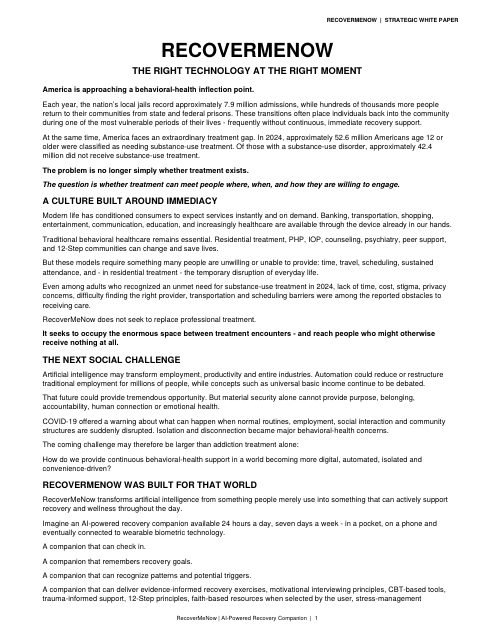
RecoverMeNow: The Right Technology at the Right Moment (Strategic White Paper)
RecoverMeNow does not seek to replace professional treatment. It seeks to occupy the enormous space between treatment encounters – and reach people who might otherwise receive nothing at all.

Re-Engagement Workbook (with the 168-Hour Lifeline)
This action-focused workbook offers core principles, character qualities, and practical tools for lasting recovery and life change, with clear explanations, honest reflection, and ready-to-use exercises for individuals and supporters.
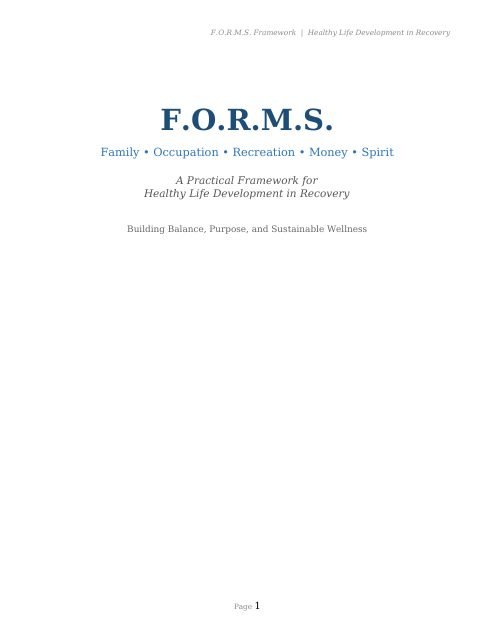
F.O.R.M.S.: A Practical Framework for Healthy Life Development in Recovery
This practical guide offers clear explanations, key principles, and actionable steps to build balance across five essential life areas, supporting healthy patterns, lasting recovery, and long-term fulfillment.
Features
Six recovery collections.
AA
Alcoholics Anonymous
Two A.A. books: the Big Book (1939 first-edition text) and 12 Steps and 12 Traditions.
ACA
Adult Children of Alcoholics
Three ACA pamphlets for adults raised in alcoholic or dysfunctional families.
CoDA
Co-Dependents Anonymous
The CoDA Twelve Steps, Twelve Promises and the Patterns and Characteristics checklist.
NIV
Bible and spiritual resources
The Holy Bible (New International Version) and every scripture passage cited in the Celebrate Recovery lessons.
THE POWER IS CONTINUITY
RecoverMeNow is designed around the other hours.
Therapist
A therapist may see someone for an hour.
Therapist
A therapist may see someone for an hour.
Therapist
A therapist may see someone for an hour.
THE POWER IS CONTINUITY
- The ride home.
- The sleepless night.
- The argument.
- The craving.
- The loneliness.
- The first week after leaving jail.
- The first month after treatment.
- The moment someone considers giving up.
That is the gap RecoverMeNow is designed to fill.
From the Re-Engagement Workbook
Recovery happens across all 168 hours of the week.
Everyone receives exactly 168 hours each week. Recovery success is often determined not by the structured parts of the week (work, sleep, scheduled meetings) but by how the non-structured, discretionary hours are used—especially the high-risk window from Friday after payday through Sunday evening.
This Lifeline tool helps you visualize your week, identify where time is currently going, and intentionally fill the most vulnerable periods with recovery-supportive activities. It turns vague intentions into a concrete weekly plan.
Your 168-Hour Weekly Breakdown
Here is a realistic baseline allocation many people in recovery use:
- Sleep (8 hrs/day)56
- Work (Mon–Fri, 8 hrs/day)40
- Recovery Meetings / Counseling10
- Exercise / Wellness7
- Family / Healthy Relationships15
- Meals / Hygiene / Daily Living12
- Free Time (Structured Recovery Activities)28
Notice the 28 hours of “Free Time.” This is the discretionary block that often determines success or relapse. How you spend these hours—especially the weekend window—matters enormously.
The Critical Lifeline Window: Friday After Payday Through Sunday
This is the highest-risk and highest-opportunity period for most people in recovery. Many relapses occur during unstructured hours, social pressure, boredom, isolation, or easy access to cash after payday. At the same time, these days offer the greatest chance to build new habits, strengthen relationships, deepen faith or purpose, and create positive momentum for the week ahead.
HIGH-PRIORITY RECOVERY ACCOUNTABILITY WINDOW
The goal is not to eliminate all free time but to intentionally structure the most vulnerable blocks with recovery-supportive activities: meetings, sponsor contact, exercise, family time, service, hobbies, faith practices, and accountability.
F.O.R.M.S.
Healthy Life Development in Recovery
Healthy life development takes on many F.O.R.M.S. In this course, we use the word FORMS as an acronym which stands for: All of these areas take on a significant part in developing a healthy form, leading us to the lifestyle we desire and driving our recovery journey.
FAQ
Questions people ask about RecoverMeNow
What is RecoverMeNow?
RecoverMeNow is an AI recovery companion app for people in addiction recovery. It combines daily traffic light check ins, data from your smartwatch or ring, and a private AI companion to notice when stress is building, then connects you with your sponsor, family or counselor before a hard moment becomes a crisis.
Is RecoverMeNow a replacement for treatment, meetings or a sponsor?
No. RecoverMeNow supports the recovery plan you already have. It helps between meetings and appointments and makes it easier to reach real people. It does not diagnose, prescribe or replace professional care.
Do I need a smartwatch to use RecoverMeNow?
No. Check ins, the AI companion, Help Now and local resources all work on your phone alone. Connecting a compatible smartwatch or smart ring adds sleep, heart rate and activity insights so the companion can notice changes you might miss.
How much does RecoverMeNow cost?
There is a free plan with daily check ins, the AI companion, Help Now and local resources. RecoverMeNow Plus costs $12 a month or $120 a year and adds wearable insights, Recovery Barometers, personalized support and a Recovery Circle. Treatment programs and courts can license seats for participants.
Is my information private?
Yes. Your conversations are private to you. You choose who is in your Recovery Circle and what each person sees. You can export or delete your data at any time, and RecoverMeNow never sells personal data.
Can treatment centers, courts or the VA use RecoverMeNow?
Yes. Organizations can offer RecoverMeNow to participants with an institutional license, a program dashboard and onboarding support. Members can keep using their companion after the program ends.
Support in the Moment. Recovery for a Lifetime.
RecoverMeNow is being designed for that moment: Recovery support that is personal. Recovery support that is intelligent. Recovery support that is available when life actually happens.